We built Dünyasan ERP in house. Every step from order to dispatch is recorded where the work happens, as it happens.
In defence part manufacturing, the job–machine–shift triangle does not behave the way packaged ERP assumes: one job runs across several machines, a shift crosses midnight, and quality approval steps in mid-production.
Building it ourselves let us fit the software to the process instead of the process to the software. Feedback from the floor reaches the screens the same week.
Every screen below is in daily use on our shop floor — none of them were put together for this page.

We open a separate login for you. Which stage your order is at, how much of it is complete, whether the machines assigned to your project are running right now and the cargo tracking number once it ships — you see it yourself, without calling us for a status update.
The screen opens only your own project to you. Which project becomes visible to which company is marked one by one — deliberately so: a wrong match must never show another company’s data.
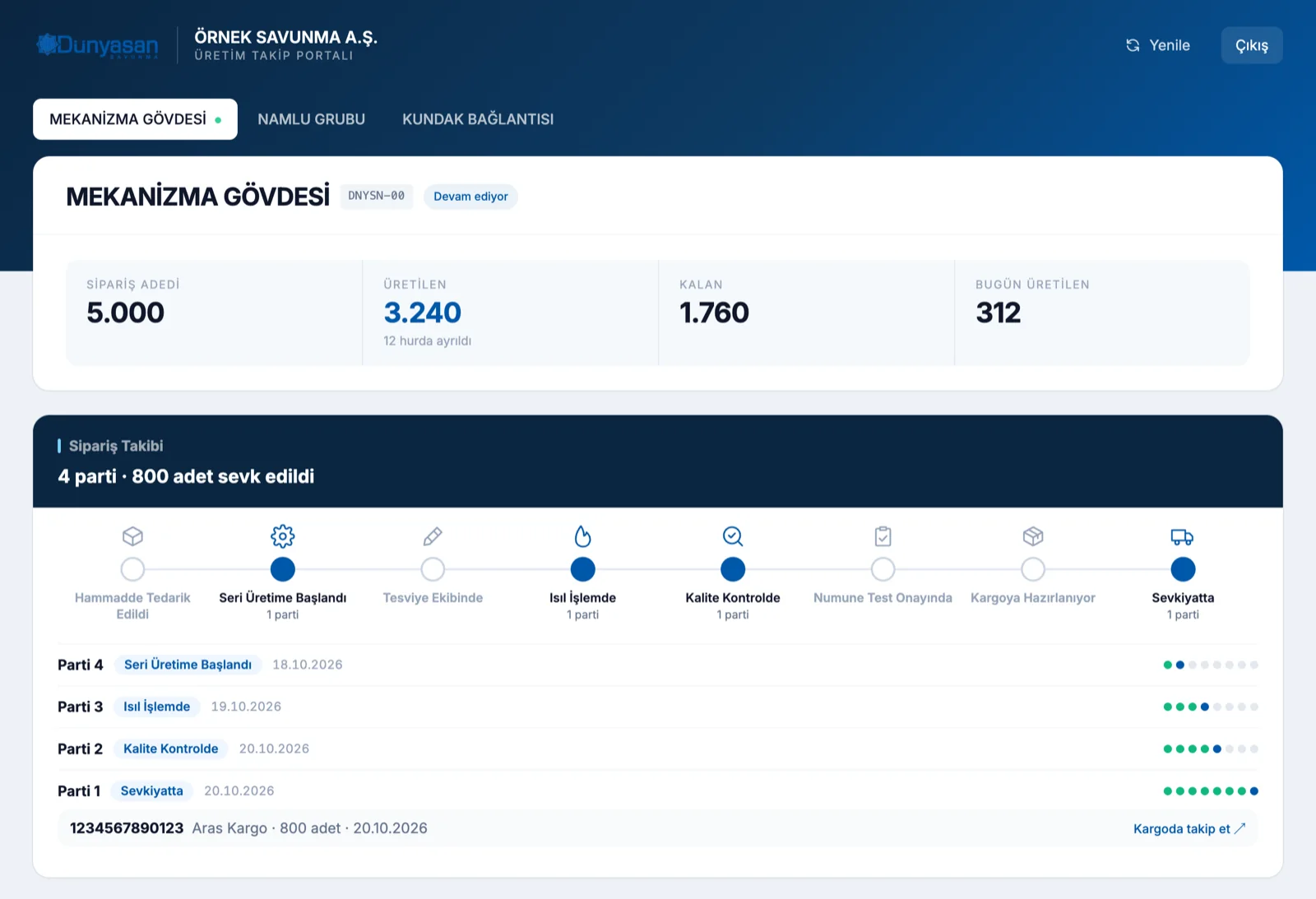
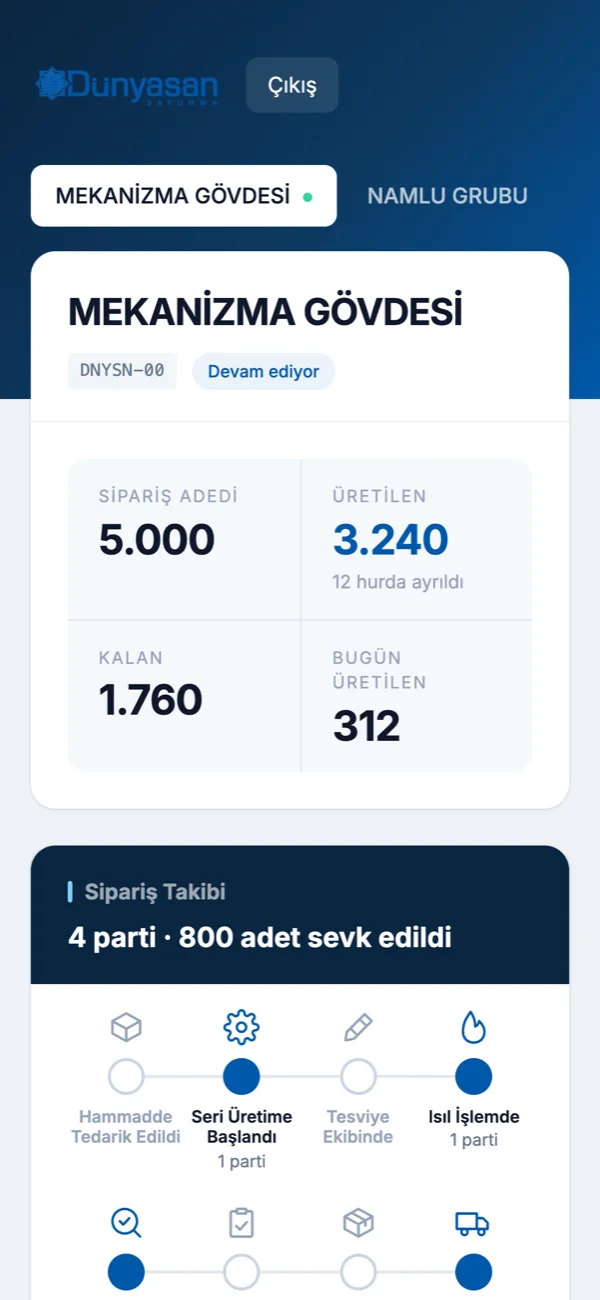
Each batch is tracked separately; stages follow the production steps of your product.
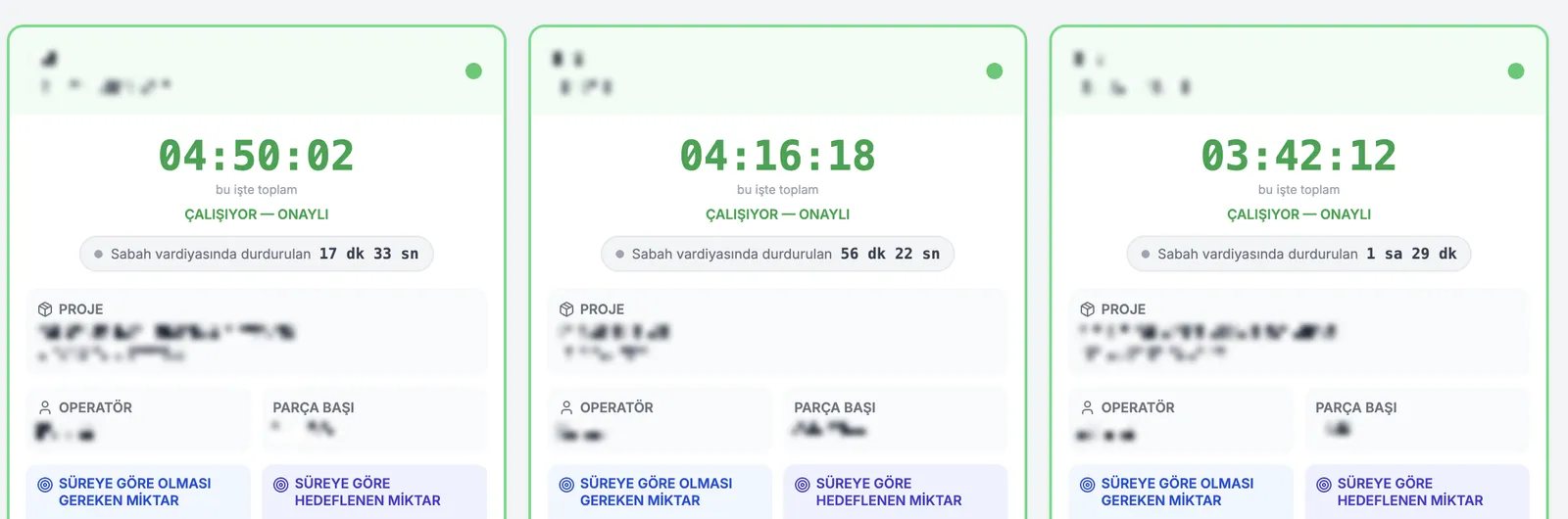
The operator starts the job at the panel, logs stoppages and closes it; the system keeps the time. How long each job ran on that machine, how much of the shift was downtime and where the cycle time stands against target are all on one screen.
Whoever plans production and whoever stands at the machine read the same data. A delay surfaces without waiting for the shift to end.
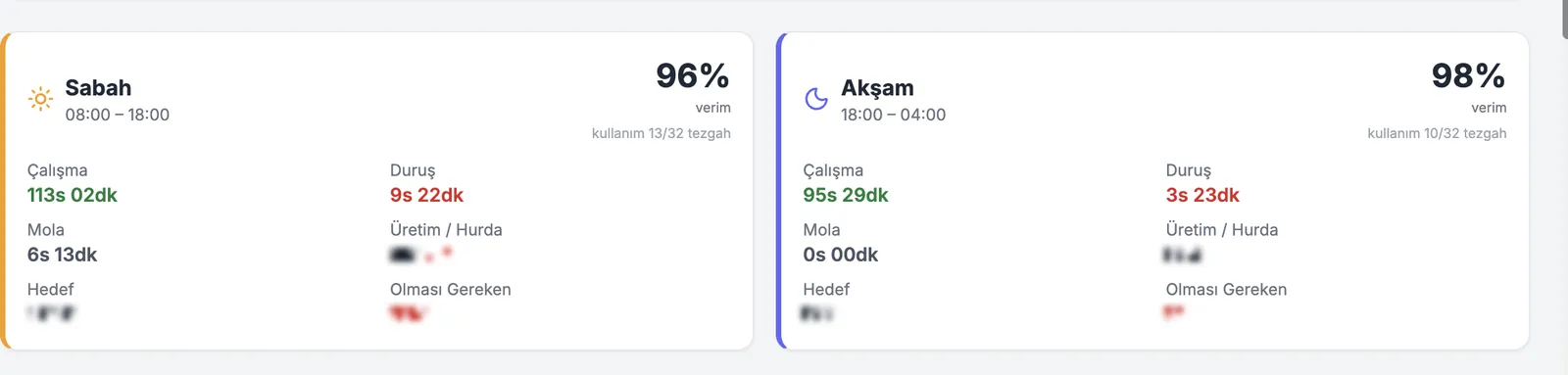
When the day and night shifts close, running and downtime hours, machine utilisation and efficiency gather on a single screen. If a shift falls short, it is seen the same day rather than the next.
Stoppages are logged with their reason: a tooling change, waiting on material, a breakdown. Recurring causes become visible that way.
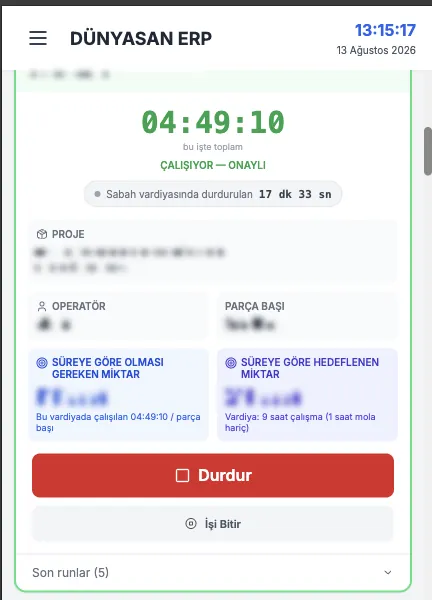
The same screen is open on the touch panel beside the machine. The operator starts and finishes the job right there; there is no writing it on paper and typing it in later — the record is made where and when the work happens.
A shift supervisor walking the floor can see the machines from a phone: which is running, which is stopped, how long each job has taken.
EN 9100 quality management requires records to be kept; we keep them in the same place as the work itself rather than in a separate ledger. When the question comes later, every link of the chain is still there.
The system covers not only the machines but everything from order to invoice. All of it on one database; the modules are not islands.
Let us walk you through how your production is tracked here, screen by screen.
Get in touch